



When Everything Looks the Same, Creative Strategy Is Your Only Advantage
AI has made it possible to create more marketing content in less time than ever before. More ads. More headlines. More images. More variations. More campaigns customized for different audiences and platforms.
But there’s a catch. When everyone has access to the same acceleration tools, speed alone stops being an advantage.
Smartly’s 2026 Digital Advertising Trends Report, based on insights from 450 marketing leaders worldwide, found that 46% of marketers now use AI to scale creative. At the same time, 86% said they’ve already seen AI-generated outputs that resemble content from competitors. Three out of four marketers are concerned that generative AI could make brands look and sound increasingly alike.
That’s the real AI creative sameness problem facing marketers in 2026. AI can help produce the work. It doesn’t automatically give the work a reason to exist.
When execution becomes easier to replicate, the advantage shifts upstream to the thinking behind it: the audience insight, positioning, message, creative concept, timing and business objective that tell the tools what to make in the first place.
That’s where creative strategy matters.
Why AI-Scaled Creative Is Creating a Sameness Problem
Generative AI is very good at finding patterns. That’s also part of the problem.
Ask a tool to produce an ad for a law firm, restaurant, home services company, financial brand or B2B software provider without giving it a strong strategic foundation, and the output will often gravitate toward recognizable category conventions.
You get familiar headlines, compositions, calls to action, photography, claims about quality, service, innovation or trust. The result may be perfectly competent…it may also be almost impossible to remember.
The advertising industry spent much of Cannes Lions 2026, wrestling with that tension. McKinsey’s post-festival analysis reported that one phrase echoed throughout the event: “mediocrity at scale.” The concern went beyond low-quality AI content. It described the flattening that can happen when more creative is generated through similar models drawing from similar patterns.
The festival itself leaned into the opposite idea. Its 2026 awards introduced an AI Craft subcategory specifically focused on the intersection where human creativity and artificial intelligence produce work that neither could create alone.
That distinction matters. The problem isn’t that businesses are using AI, the problem is allowing AI to make decisions that should come from strategy. In other words, access to AI isn’t differentiation, but what you tell it to do can be.
What Strategy-Led Creative Actually Looks Like in Practice
“Creative strategy” can sound abstract until you compare it with how templated marketing actually gets produced.
Strategy-led creative starts with a business problem, not an empty Canva file or an AI prompt.
It asks questions like “Who are we trying to reach and what do they actually care about?”, or “What does the competition keep saying and what can our brand credibly say that competitors can’t?” Only then does execution begin. Here’s the difference:
| Without Creative Strategy | With Creative Strategy |
| “Create a Facebook ad for our service.” | Identify the audience problem, desired action and strongest differentiator before building the ad. |
| Use a standard industry headline. | Develop messaging around an insight competitors aren’t already repeating. |
| Choose imagery because it looks professional. | Choose imagery because it reinforces the positioning and tells part of the story. |
| Make the same message fit every channel. | Adapt the idea to how people behave on search, social, video, email and other channels. |
| Measure clicks and impressions alone. | Connect campaign metrics to leads, conversions, sales quality or another meaningful business outcome. |
| Ask AI to invent the strategy and execution at once. | Give AI a clearly defined strategy and use it to accelerate selected parts of execution. |
Consider a home services company. The templated version might lead with:
“Quality Service You Can Trust.”
There’s nothing inherently wrong with it. There’s also very little another qualified company couldn’t say.
A strategy-led campaign could instead uncover that customers are primarily anxious about not knowing what happens after they schedule an appointment. The creative direction might focus on transparency: what happens during the inspection, what customers receive afterward and exactly what the next step looks like.
Now the campaign is addressing a specific barrier to conversion. That affects the headline, video concept, landing page, paid-search copy, social content and follow-up communication. The idea isn’t merely more creative–it’s more useful.
Strategy Gives AI Better Raw Material
AI works differently when it receives a real creative strategy instead of a generic request.
Imagine prompting a system with:
“Create five ads for a Jacksonville business.”
Compare that with giving it a defined audience, customer tension, competitive landscape, brand voice, campaign objective, offer, proof points, prohibited clichés and desired action.
The tool now has boundaries. More importantly, the business has made decisions, and differentiation starts there.
Once the strategy is established, AI can become extremely useful for tasks such as exploring headline variations, adapting an established concept to multiple formats, creating early-stage visual directions, organizing research or accelerating production workflows.
That frees creative teams to spend more time evaluating ideas rather than mechanically producing every possible variation. The important part is sequencing.
Strategy first, tools second.
Creative Strategy Is About Results, Not Creative for Creativity’s Sake
Being different isn’t enough. A campaign can be wildly original and still fail to accomplish anything useful. Effective creative strategy connects differentiation to an outcome. If a business needs better-qualified leads, strategy should influence how the campaign filters and attracts prospects. If awareness is the problem, the creative needs recognizable assets and a memorable idea.
When people understand the product but hesitate to buy it, the work should address the objection standing between attention and action. If a brand is entering an overcrowded category, the strategy needs to give customers a reason to mentally separate it from everyone else.
That’s a different way of thinking than simply asking whether something “looks good”, it asks whether the creative is doing its job.
What Jacksonville Businesses Should Expect From Creative Strategy in 2026
For a Jacksonville business evaluating a creative strategy marketing agency in 2026, the conversation shouldn’t begin with how many social graphics, videos or ads the agency can produce.
Production capacity matters, but capacity is increasingly easy to scale. The more valuable questions are:
- What does the agency need to understand before it creates anything?
- How does it research your audience and competitors?
- How does it decide what your brand should say?
- How does one campaign idea translate across paid media, organic social, search, video, websites and offline advertising?
- What gets measured afterward?
Our approach is built across strategy, design, digital advertising, research, video, web development, SEO and other marketing disciplines rather than treating those channels as unrelated production assignments. The “Interact, Don’t Interrupt” philosophy is based on creating advertising around what matters to the audience instead of simply pushing messages at them.
That philosophy becomes even more relevant when producing content itself is no longer difficult. You don’t need more noise simply because technology makes noise cheaper to produce, you need a stronger reason for someone to care.
AI Should Accelerate the Strategy, Not Become the Strategy
The lesson from 2026 isn’t to abandon AI. That would ignore what these tools can genuinely do for marketing teams.The better question is where AI belongs in the process.
Use it to accelerate, explore, analyze or edit. But, don’t mistake an abundance of output for an abundance of ideas. Smartly’s research points to the same opportunity: the next challenge isn’t simply faster production. It’s using AI while preserving distinctive, brand-authentic creative.
When every competitor can generate another 50 ads, another 20 headlines and another dozen images, producing more of them isn’t much of a moat. Knowing what’s worth producing is.
When Everything Looks the Same, Being Recognizable Matters More
The tools will continue getting faster. Production will continue getting cheaper. More businesses will gain access to capabilities that once required significantly more time and resources. That doesn’t make strategy less important. It makes strategy the hardest part to commoditize.
Your brand still has to make choices about what it stands for, whom it wants to reach, what matters to that audience and what it can say that someone else can’t easily copy. Those choices shape memorable creative. And, memorable creative gives the technology something worthwhile to scale. If your current marketing is producing more content but becoming harder to distinguish from everyone else in your category, it may be time to look upstream.
Schedule a strategy consultation with Mad Men Marketing to audit whether your current creative is differentiating your brand or helping it blend in.
Interact, Don’t Interrupt.

Lawyers’ Love Affair With Billboards
Why Do Personal Injury Lawyers Love Billboards? And Why They Should Rethink Their Strategy
Billboards are everywhere, and if you’ve ever driven down a major highway, you’ve likely noticed a trend—personal injury attorneys dominate this outdated advertising medium. In fact, one could argue that if it weren’t for this particular industry, the entire billboard sector might collapse. But why do lawyers cling so tightly to billboards? Is it a misguided attempt at brand recognition, or just an ego-driven need to see their own faces plastered across the skyline?
The Appeal of Billboards for Personal Injury Attorneys
1. The Visibility Factor (Even If It’s Ineffective)
Law firms that invest in billboards believe that sheer exposure will lead to business. But visibility doesn’t equal engagement. A driver speeding down the highway at 70 mph has mere seconds to register an attorney’s name and phone number, and the chances of that driver immediately needing legal representation at that moment? Almost zero.
2. Ego Over Strategy
Many lawyers love seeing their own faces on billboards, as if their larger-than-life presence alone will inspire trust. But advertising should be about connecting with clients, not fulfilling a personal need for recognition. Consumers don’t hire attorneys because they’ve seen the same headshot 50 times on their daily commute—they hire based on trust, reputation, and credibility.
3. Lackluster Creativity
Legal billboards are infamous for their uninspired creative. Whether it’s a serious-looking attorney with crossed arms and a phone number in massive font, a particular Tampa lawyer harkening back to his good old days at college in EVERY SINGLE AD (even though it was probably more then 30 years ago), or a cringeworthy pun, the result is the same: forgettable. The best advertising evokes emotion and action—billboards for attorneys, on the other hand, rarely achieve either.
The Bigger Problem: Outdated Advertising and Neglected Digital Presence
While lawyers continue to dump money into billboards, many of their websites remain outdated, slow, and difficult to navigate. A poorly designed website sends a clear message to potential clients: If you don’t care about your own digital presence, how much will you care about their case?
Smarter Advertising Strategies for Attorneys
Rather than burning cash on overpriced, ineffective billboards, law firms should focus on data-driven digital marketing strategies that actually generate leads and build long-term brand authority:
- Google Search Ads & Local Service Ads – When people need a lawyer, they don’t scan billboards. They Google it. Investing in Google Local Service Ads ensures that law firms appear when and where potential clients are actively searching.
- SEO & Content Marketing – A professionally designed website with well-optimized legal content helps law firms rank higher on search engines and establish authority.
- Social Media & Video Marketing – Personal injury attorneys should leverage YouTube Video Ads and social media platforms to connect with potential clients in a more engaging, memorable way.
- Retargeting & Email Campaigns – Digital advertising allows law firms to re-engage potential clients who have visited their website but haven’t taken action.
Conclusion: Stop Wasting Money, Start Building a Better Brand
Personal injury attorneys have relied on billboards for far too long, but in today’s digital-first world, that approach is inefficient, outdated, and costly. Instead of pouring money into roadside ads with uninspired creative and minimal engagement, law firms should invest in smarter, measurable marketing strategies.
At Mad Men Marketing, we specialize in creating customized digital marketing strategies that actually convert leads into clients. Don’t waste your budget on billboards—contact us today and let us help you build a brand that truly stands out.

How to Properly Light a Stationary Subject for Video and Photo Production
In the world of advertising and marketing, high-quality visuals are paramount. Proper lighting can make all the difference, whether you’re shooting a commercial, creating content for social media, or photographing products for a catalog. Here’s a comprehensive guide on how to properly light a stationary subject for video and photo production.
Understand the Basics of Lighting
Before diving into specific techniques, it’s essential to understand the fundamentals of lighting:
- Intensity: The brightness of the light.
- Color Temperature: Measured in Kelvin (K), this describes the color of the light. Daylight with a clear sky is between 5000K-6500K, while tungsten lights are around 2500K-3500K.
- Direction: The angle at which light hits your subject affects shadows and highlights.
- Quality: Refers to how hard or soft the light is. Hard light creates sharp shadows, while soft light produces a gentle transition between light and shadow.
Use Three-Point Lighting
Three-point lighting is a standard method used in video and photo production. It involves three primary light sources:
- Key Light: The main light that shines directly on the subject, providing most of the illumination and defining the subject’s shape.
- Fill Light: A secondary light placed opposite the key light to fill in shadows created by the key light, ensuring the subject is evenly lit.
- Back Light (or Rim Light): Placed behind the subject, this light helps to separate the subject from the background, adding depth and dimension.
Choose the Right Equipment
Selecting the appropriate lighting equipment is crucial:
- LED Lights: Energy-efficient and versatile, LEDs allow you to adjust both intensity and color temperature.
- Softboxes: These diffuse light, creating a soft, even illumination that’s ideal for reducing harsh shadows.
- Reflectors: Use these to bounce light onto your subject, filling in shadows without the need for additional light sources.
- Light Stands and Clamps: Ensure your lights are securely positioned and easily adjustable.
Positioning Your Lights
Proper positioning of your lights is key to achieving the desired effect:
- Key Light: Position it at a 45-degree angle to the subject’s front and above eye level to create natural-looking shadows.
- Fill Light: Place it opposite the key light, at about the same height, but at a lower intensity to avoid creating competing shadows.
- Back Light: Set it up behind the subject, elevated, and angled towards their back. This light should be subtle but enough to outline the subject.
Control Your Environment
The environment in which you’re shooting also plays a significant role:
- Background: Choose a background that complements your subject. Keep it simple to avoid distractions.
- Ambient Light: Be aware of ambient light sources such as windows. To maintain control over your lighting setup, you might need to block or diffuse natural light.
- Color and Reflective Surfaces: Consider the colors and surfaces in your shooting area. Bright or reflective surfaces can bounce light unpredictably, affecting your setup.
Adjusting for Different Subjects
Different subjects require different lighting approaches:
- People: Soft, even lighting is generally more flattering. Use softboxes or umbrellas to diffuse the light.
- Products: Highlight the product’s features with harder light to create defined shadows and emphasize textures.
- Large Objects: Ensure even lighting across the entire object. To achieve this, you may need multiple key and fill lights.
Test and Adjust
Always test your setup before the actual shoot:
- Take Test Shots: Capture test images or footage and review them to check for unwanted shadows, hot spots, or color imbalances.
- Make Adjustments: Don’t be afraid to move lights, adjust intensity, or add diffusion materials until you achieve the desired look.
Proper lighting is an art that requires practice and experimentation. By understanding the basics, using the right equipment, and carefully positioning your lights, you can create visually stunning content that beautifully highlights your subject. Remember, the key to mastering lighting is to keep testing and adjusting until you achieve the perfect shot. Happy shooting!
Ready to take your video and photo production to the next level? Contact us today to learn more about how our expert team can help you create stunning visuals for your brand!
Kia’s Confusing Logo
When it comes to design, the importance of typography can’t be overstated. It can contribute to brand recognition, info hierarchy, and overall legibility.
For those who aren’t familiar with the term “typography”, it’s the strategic arrangement of type in order to make written language readable and visually appealing. In graphic design, typography’s two main purposes are to:
- Communicate a message
- Promote legibility
If one’s typography is failing in either of these objectives, it can greatly affect the desired response from the intended target audience.
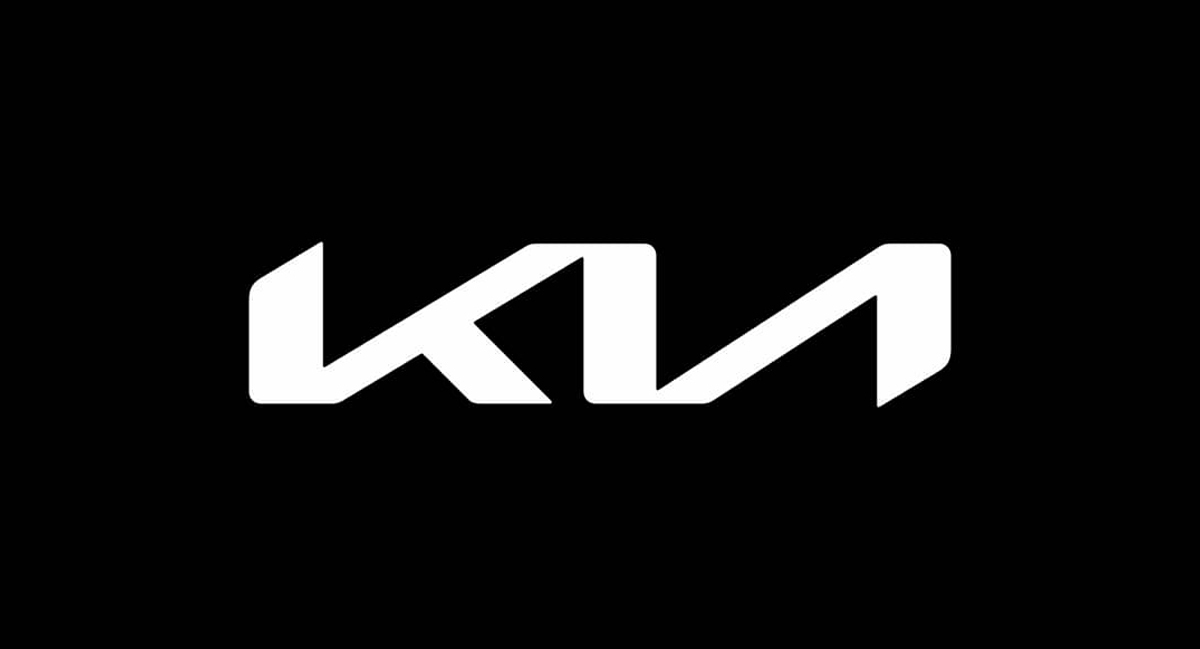
Anyone in the field of design or marketing understands how important brand recognition is, and car companies are among the most recognizable in the world. In early 2021, Kia noticed that companies like Nissan, Volkswagen, BMW, and GM were all rebranding and decided to hop on the bandwagon. Their solution to an outdated and juvenile logo was to design something bold, stylized, and immediately recognizable.
They succeeded in all of those and still, unfortunately, missed the mark.
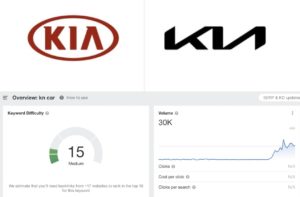
The shortcoming stems from the legibility of the logo, which is lost due to how the company decided to connect the K and the I to the A in the middle of the name. One could argue that the legibility here is a matter of opinion and that the logo clearly reads KIA, but you can’t argue with Google Analytics.
According to Google, over thirty thousand people a day Google the letters KN, thinking that the stylized logo is portraying a backward N instead of an I and A.

While the new KIA logo isn’t the worst logo taboo we’ve seen before, it is a detrimental one and has clearly been confusing drivers since it was unveiled. Here at Mad Men Marketing, we understand how important it is to have a brand logo that not only speaks to you and your business but is legible and above all, effective.
5 Insights on Intellectual Property
Most of us, at one point or another, have seen those small encircled letters accompanying a logo or design. Well, that letter is a symbol denoting one’s intellectual property. Intellectual property, or IP, is something one creatively contrives. This could be a work of art, a tagline, a logo, or an invention. There are five types of IP that are most commonly used.
-
Copyright
A copyright is one of the most commonly used types of intellectual property, which protects the original work of the creator. This covers a wide spectrum of mediums including paintings, illustrations, photos, music, apps, books, movies, and much more. This isn’t something you need to apply for, it’s something you obtain automatically. You can do this by marking your work with the © symbol. This will legally protect your work from people copying it, redistributing it for free or for profit, making adaptations of your work, or displaying your work publicly.
-
Trademark
A trademark is simply any symbol, design, or phrase that’s used to identify a service or goods coming from a specific source. There are two categories of trademarks: registered and unregistered. Both of these trademarks are protected by law, but federally registered trademarks have a wider range of protection. You can trademark copy, audio, colors, smells, motion graphics, logos, and much more. Trademarks are protected for up to 10 years.
-
Trade Secrets
Have you ever wondered what the Colonel’s secret fried chicken recipe is? I bet you have, but unfortunately for us, that’s a trade secret. A trade secret is a piece of information that the owner classifies as legally confidential. This includes a broad range of information, including info that gives its owner a competitive advantage due to its limited availability to the public.
-
Design Rights
A design right protects key attributes of a product or article that are specific to its identity or appearance. Design rights are applied to a variety of products such as home goods, handcrafted items, containers, furniture, jewelry, electronic devices, and much more. A great example of this would be a Dyson vacuum. Both the technology and design are protected so the structure, aesthetic, and functionality are all unique to that company.
-
Patents
Have you ever had a great idea for a product, just to realize that someone has already beat you to it and patented it? The patent can prevent you from coming out with a product closely mimicking another because it protects and registers inventions and makes it illegal for anyone to make or sell the said invention without the owner’s consent. The invention must be new, inventive, and have industrial applicability.
It’s very important to know which of these specific types of intellectual property apply to you and your product, service, design, or invention. Being diligent about something like your company name or logo ahead of time can save you a lot of trouble down the road, so remember to always protect your work!